Friday, November 5, 2010

Buck must find two college students CH14

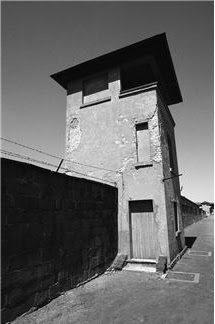
Guard tower at Auschwitz


ENCOMIENDA


Chapter 14


Melvin Alcorn seemed pensive, focusing on his driving on the trip to AGG’s eastern camp. I thought that he seemed even younger than he did standing outside, and that the crisis he was about to be involved in would probably be the most crucial and transforming of his brief career. Confronting evil is always bracing. So I began our conversation lightly.

“How long have you been with AGG?”

“Almost three years.”

“Have you always worked in agriculture?”

“More or less. I grew up in a small town in Central Florida. My grandfather had orange groves for many years, so I grew up around farms. My father was an agricultural inspector for the state. However, my degree was in business administration. My first job was with a supermarket chain, but I quickly realized that I wanted to be closer to production than distribution. I wasn’t great with customers. So, I networked a little and found an internship at AGG. Last year, I was hired full salary. That’s when I came to Immokalee.”

“How’s the job going?”

“Not bad, but I have to tell you, I wasn’t really prepared for the squalor that some of the migrants live in. I interned at corporate headquarters in Kansas. This is my first real assignment, so I’m really still learning the ropes.”

“Do you get along with your boss?”

“Al Genepri? Sure. He’s a great guy, but very busy. I sometimes wish he had more time to instruct me. When he does, I always learn something valuable. In fact, he’s in a meeting in Kansas right now. That’s why I’m doing this. Which reminds me, what exactly is going on at the eastern camp?”

“You should be able to tell me that. For instance, what do you think of Joseph Beanland?”

He glanced at me and said, “Well, I can’t say we have a lot in common. In fact, I don’t care for him much at all. He’s crude, tells jokes I don’t appreciate. But his crew seems pretty efficient.”

“No complaints?”

“Well, there was one incident in November last year when a farm worker complained that Beanland was terrorizing him. Beanland came to the office and explained things to Al’s satisfaction. According to the office grapevine, the worker had been harassing some of the women in the camp and Beanland sat on him, literally.”

“Ouch. That’s quite a load.”

He laughed.

We were in the lead vehicle and he turned the caravan onto a gravel road heading roughly east, northeast. The road had been elevated above the swampland, so there were deep water-filled ditches on either side of the road. Beyond the ditches were sabal palms, palmetto brush, scotch pines and waterlogged land. The tires crunched over the gravel and threw up thin dust clouds.

A few miles down the road the truck eased up onto a ridge that flattened out for a hundred yards and extended northward for hundreds of yards and in the middle of the ridge was the camp, at which the road ended. The truck skidded to a halt, the dust settled and we stepped out.

A ten-foot-high chain-link fence ran from one ditch to the other. A gate was in the center of the fence. Centered on the gate were a green triangle and the white letters AGG. A wooden guardhouse sat just inside the gate. I thought, Arbeit Macht Frei.

A skinny, baseball-capped guard carrying a shotgun appeared from inside the guardhouse. He recognized the company truck and unlocked the gate. He said, “Howdy, Mr. Alcorn. Beanland told me he didn’t want anybody coming in and to stay out here. But I guess he didn’t mean you.” The guard was in his fifties, Caucasian, well-worn and nearly used up: missing teeth, unshaved, tufts of hair unruly from the rim of the baseball cap. And when he got close, his smell told a smoker’s unwashed tale.

Alcorn said, “How ya doin’?” However, I could tell that he didn’t remember the guard’s name. This verified Alcorn’s difficulty with customer relations. Front people had to remember customers’ names; they had to love people. It also verified that he hadn’t been to the camp in some time.

“Ok.” The guard nodded at the deputies and looked at me inquiringly.

“Lieutenant Suarez,” Suarez said and showed his badge.

“Hi, name’s Bob Cocker.”

“We’re looking for a couple missing boys. Seen any newly arrived young men around here.”

“Well, Lieutenant, migrants come and go. We get plenty of new ones all the time. I don’t know half the crew anymore. Everybody’s out working now.”

“So you can’t verify that they’re not here?”

“Can’t say ‘yes,’ can’t say ‘no.’”

“Who else is in camp?”

“Just me and an old feller that’s sick.”

I showed the guard the pictures of Nano and Paulie. Cocker looked at them, removed his cap and scratched his head. “All I can tell you is I don’t recognize ‘em. These fellers look a trifle highfalutin to be migrants.” He didn’t seem to be lying, but he also didn’t seem very bright and perceptive. He was just a worn-out old guy who had found a job that would carry him to the end of life. He didn’t know much and didn’t care to know much more. Just the kind of person Beanland could rely on.

Alcorn said, “We’re going to look around. You can stay at your post.”

Cocker looked relieved that his powers of conversation and knowledge would be stretched no further. He pulled a thin pack of Camel cigarettes and a match book from his shirt pocket, extracted one cigarette, flipped the matchbook open – all these practiced physical motions he did very well – struck the match and inhaled the first carcinogenic puffs with great pleasure. I envied his blissful ignorance a bit, but not enough to share his and Suarez’s habit.

Alcorn, the deputies and I turned to the camp. Near the gate was a doublewide mobile home and four smaller trailers around it and two sheds and a pen of some kind behind this cluster. Alcorn indicated that that was where Beanland, the camp cook, the custodian and the guards lived. A rusty, ancient Oldsmobile sat next to the trailer closest to the fence. Beyond was the main camp. It was laid out very precisely in rows of cabins centered on a central building. Eight rows of cabins twenty deep bracketed the central building. One hundred sixty cabins in all. The uniformly white cabins were prefabricated dwellings set up on cinder blocks and anchored to the ground by staked cables. Each had a door and steps in front and two screened windows, one at the back and one on one side. These were always open because the units had no air conditioning.

As we walked down the middle rows, I looked inside. Each cabin was about as large as my bedroom and had two metal bunk beds and four simple, plastic, straight-back chairs and one circular plastic table on a central pedestal. Other furnishings were varied depending on the residents. I did the math: 160 times 4 equals a designed capacity of 640 workers for the workforce. None of the cabins had plumbing.

Plumbing was in the central communal building, which was a concrete block rectangle with three areas: the west end was a kitchen and cafeteria; the central area was a community recreation area with a television, Ping-Pong tables and vinyl couches; the east end held toilets and urinals and showers and wash basins – a dozen of each. I did the math: the 640 residents would take about two hours to cycle through the restroom area at the end of the day if each one spent about ten minutes washing. I imagined that the line at the toilets could get pretty desperate after dinner. However, at the north end of the camp were a row of twelve port-a-johns, so that would relieve the pressure on the toilets.

We walked up and down each row of cabins until we came to one with coughing sounds inside. We peeked in and there was the “old feller,” probably the same age as Cocker. He was unconscious, coughing in a fitful, shivering, feverish sleep. We left him in peace and walked on.

The camp was very secure from both ingress and egress. North, east and west, the camp was surrounded by bogs and swampy land full of reptiles of various sorts. Not an area that any sane person outside of Survivor would want to pass through. South was the supervisor’s compound, fence and gate and guardhouse.

At the end of this trudge, Alcorn said, “I guess the guard is right. Nobody’s home. Are you guys satisfied?”

I said, “Let’s take a tour through the administrative area.”

Alcorn shrugged, “Whatever.”

The trailers surrounding Beanland’s doublewide were uniform, no doubt bought wholesale: one for the cook, one for the custodian and one each for the two guards.

As we approached, we heard the dogs for the first time and that explained the pen we had seen. They must’ve heard and smelled us approaching, so they started growling and barking and howling. None of our scents or voices were familiar to them. We went straight to the snarling, barking dogs: an assortment of six in a three-compartment pen: two Rottweilers in one, two Dobermans in another, one shepherd and a hound in the last. The fence was a ten-foot chain link just like the entry fence. The three doors to the pen were just large enough for a big man to enter. Behind the pen, a small airboat was tied to a tree.

The male Deputy Johnson whistled.

The female Deputy Johnson said, “These dogs are not pets.”

Suarez said, “Guard dogs.”

Alcorn said, “I think it’s Beanland’s hobby.”

I said, “Could we take a look inside the sheds?”

Alcorn hesitated. “Gee . . . I don’t know . . . I’d have to call . . .”

I said, “This is all AGG property, isn’t it?”

“Well, yeah, technically, but I’m not sure if the sheds are for our stuff or Beanland’s. I’d have to get an attorney’s approval.”

“Nevermind. Let’s go. I’ll ride back with Suarez.”

On the way out I spoke to Bob. “Say, what’re all those dogs for?”

He said, “Them’s Beanland’s.”

“Yeah, I figured that, but what does he use ‘em for.”

“Night patrol.”

“What’s night patrol?”

“You know, after lights out, he lets the dogs out.”

“When’s lights out?”

“Ten o’clock.”

“He lets them all out?”

“Naw. Two at a time. Fer a few hours each. That’s their run time.”

“Isn’t that dangerous?”

“Naw. He flashes the lights at the community center at ten. Then he walks to the pen and lets a pair out. Everybody knows to keep their doors closed after that.”

“Thanks. Have a nice day.”

End of Chapter 14
 
Arbeit Macht Frei is German and was the motto at the main gate into Auschwitz, where Eichmann ruled his slaves and victims; in English it reads "Work Shall Make You Free."
 
Neither Dobermans nor Rotweillers are inherently vicious animals.  They must be trained to be guard dogs or attack dogs.  However, they are quite territorial and will not allow strangers into the home area without the permission of the owners.  That they were originally German breeds and used to patrol concentration camps is meaningful.
 
John Steinbeck's masterpiece Grapes of Wrath concerns the migrant stream that left the Dust Bowl for California during the Great Depression.  It's a wonderful treatise on suffering and compassion and righteous anger.
 
Below are items related to this Blog.

Friday, October 29, 2010

Buck must find two college students Ch.13


ENCOMIENDA

Chapter13


Holding the piece of paper as he sat at his desk, Suarez said, “That’s one of the multinational agribusinesses. They own a lot of prime cropland around here and have several operations. I believe the letters stand for ‘Agricultural Green Grocer’ . . . or maybe it’s ‘American Green Grocer.’ Anyway, they never use the full name anymore. Everyone knows them as A-G-G.”

“Do they have a camp east of town? That’s where Teresa pointed.”

“They might. I’ll call ‘em. By the way, I got feedback on the fat guy. His name’s Joseph Beanland, nickname ‘Chunky.’ Last known address was in Pahokee. His traffic record is fairly clean: one ticket for running a stop sign and one DUI. Only priors are disturbing the peace, illegal fishing, hunting out of season, poaching on a national preserve, and an assault and battery for a bar fight. Seems like a mean, rowdy guy without a whole lot of respect for rules and regulations.”

“And knows how to handle a knife and a gun. How ‘bout his employer?”

“Listed as ‘independent contractor.’ Probably means he’ll do whatever he’s hired to do without compunction.”

“He must be working for AGG.”

“Could be.”

“That would explain Juan and Teresa’s reaction.”

“I’ll call now and ask about that, too.”

While Suarez was on the phone, I made a couple calls, too. One to the office: Neither Caridad nor Ruben had anything additional to report, except that Concepción’s insurer had sent a claims adjuster who would be arriving in Immokalee soon to look at the Samurai. Another to Christian Osceola.

His report was more interesting. He told me which migrant camps had the worst reputations. One was the private camp of a Dan Nichols, but this local farmer had had his stingy, ornery reputation for a long time and so attracted only the most naïve or most desperate workers – winos and bums; besides, his farm was southwest of town. The other two were contracted by AGG. The story there was that AGG itself had no brutal policy, but it was laissez faire in its management of the camps, leaving the details to the private contractors. One camp was north of town, but the other – the newest one – was east. This was its second year of operation. The Mexicans called the foreman ‘El Gordo,’ said he was the meanest crew boss around.

So, when Suarez got off the phone I knew what he would say.

“You’re right,” he said. “AGG has a contract labor camp east of town and the camp is contracted to one Joseph ‘Chunky’ Beanland.”

“Can we go out there now?”

“Sure, but since I have no warrant, we have to wait for an AGG official to accompany us.”

“Can we get a warrant?”

“Not on the basis of your disappearing witnesses. Don’t worry. An AGG guy is on his way here now.”

While we waited for that official, I stepped outside and called the office again and talked to Ruben. “Ruben, call Scotty, see if he can come here today and bring three or four of his guys with him. Tell him that they should come heavily armed and with their firearm licenses and security IDs and night gear and prepared for outdoor work. Call me back when you’ve made arrangements.”

“Sure, Buck. Should I come?”

“No, not necessary. This is more precautionary than essential. Talk to you later.”

I didn’t want Ruben to come because I couldn’t face Luli and the kids if something happened to him, and my belly was telling me that this case was about to take a nasty turn into something evil and brutal. If knives were going to slash and bullets were going to fly, I didn’t want Ruben in the path of any of those deadly metal edges and points.

I also wanted to get Iris to a safe place and make her stay put.

Scotty headed Bulwark Security Operations, a firm based in Fort Lauderdale. His men were the best: physically conditioned, well trained in both unarmed and armed combat, provided with the latest technology and weapons, disciplined and confident. Plus, he was a friend whom I had known since he left Whitehall and moved to the States to start his own security business some dozen years ago. He would honor my request and follow my instructions to the letter.

As I re-entered the station, Suarez was heading out. He had Deputies Johnson and Martha with him. This time I read her tag: surprisingly Johnson also. I said hello to the Deputies Johnson and shook their hands. Suarez said, “They’re coming with us, just in case. A show of force never hurts, with or without a warrant.”

“You and I think quite alike.”

Outside again, we met Melvin Alcorn, an assistant manager for the Immokalee operations of AGG. He looked fresh: white shirt, green tie, black trousers, work boots – all except the boots immaculate. He looked to be in his early thirties, but already a little paunchy, probably spent more time at his desk than in the fields. His brown hair was newly cut and groomed. He smiled a broad smile and asked, “Suarez?”

“That’s me. This is Buck Jaspers. He and the deputies will go with us.”

But Melvin had a question. “Just why is it we’re going out there to the east camp?”

“To see if some missing boys might be out there. We’ve heard they were seen there.”

“I doubt it.”

“How often do you go out there?”

“We’ve got eight camps, Lieutenant.”

“That wasn’t my question. Maybe I should ask when the last time you were out there was.”

“I was out there in October. Everything was in order then.”

“The very beginning of the season. Get in your truck. It’s time to pay a follow-up call.”

I said, “Mr. Alcorn, may I ride out there with you? I’d like to ask you some questions.”

“Ok, over this way.” I followed him to a white long-cab, pick-up truck displaying on each door a green triangle and the letters AGG in white with shadow.

As we pulled away from the station, I saw Iris running toward us, then stop and wave her arms. I couldn’t hear, but she seemed to be shouting something. I had purposely left her behind because I didn’t know how dangerous this trip could be. She looked angry. I hoped that she didn’t know how to hotwire a car; otherwise, my Z3 might soon be following us.

End of Chapter 13
 
More and more of our food is being grown by multinational agribusiness corporations.  They are very good at producing huge quantities of food and distributing it, but to do so, they use synthetic fertilizers, growth hormones, and pesticides.  So, what exactly are they distributing?  Is it as nutritious as they would like us to believe?  Are we getting more chemicals than is good for us?  Are there any other less dangerous ways to produce such vast amounts of food?
 
Below are items related to this blog.

Sunday, October 24, 2010

Accident on the poet's road


ACCIDENT: ROBERT FROST EXPRESSWAY

Ironic,

the traffic—

boisterous buses, truculent

trucks, cacophonous cars—

all tumbled together, scrunching

into the tip of an arrow

to pass by—ogling slowly—

the little Japanese

car and the Corvette

bashed together,

and their upwardly

mobile drivers

grimacing in

morning’s

heat and

fumes

on this road

more traveled.

And that!

Up there!

Was that an

avuncular poet’s

face sneering down

from the water-heavy

cumulus

over the city?


June 1987/2010

"Accident: Robert Frost Expressway" was first published in City Magic, 1987. It is a shaped poem, the visual form of which reflects its meaning.  I find it ironic that the author of "The Road Less Traveled" should have a Miami expressway named after him.  When I got tangled in a traffic jam one morning on that same expressway, the poem came to me--I began writing it on a notepad as I sat immersed in the conglomeration of vehicles.
 
Below are items related to this blog.

Saturday, October 23, 2010

Explosions: Challenger and Hindenburg


APOSTROPHE TO THE GOODYEAR BLIMP

ON BEHALF OF THE CHALLENGER


For us living

The cerulean bay is tacked with silver

As the colly birds ply from their rookery.


Once upon a time,

You were the inspiration

With which our hearts rose.


There was a time

In which, you too, exploded

At the very peak of rightness.


Now you’ve got that eye

For spectacle and catastrophe,

A wanderer among the winds.


You’re a silvered man

In aviation, wise and alive,

In your cool uses.


Pray for your baby.

Let her be worthy

Of the phoenix

And the unicorn.


January 1986

"Apostrophe to the Goodyear Blimp on Behalf of the Challenger" was first published in City Magic, 1987.  Shortly after the Challenger explosion, I was sitting on my balcony when the Goodyear blimp passed by.  It had been covering a sporting event in Miami.  My mind made the connection between it and the space shuttle; thus, the poem.

Below are items related to this blog.

Friday, October 22, 2010

Buck must save two colllege students Ch.12


ENCOMIENDA


Chapter 12


My cell phone rang as Iris and I were leaving the motel room for breakfast the next morning. I answered. A female voice said, “Es usted el hombre que buscara los dos muchachos?”

“Sí, soy él.”

“Yo les vi.”

“Donde?”

“Tiene los cinquecientos dolares?”

“Sí.”

“Traigame el dinero y le decira.”

I agreed to meet her at a Mexican cafe in Immokalee.

On the way there, I called Lieutenant Suarez. “I got a bite on the flyers I spread yesterday. I’m going to meet her at the Caballero restaurant. Can you back me up?”

“Ok. I guess it’s huevos rancheros for breakfast. Give me a half hour.”

“If the info’s good, I’ll buy breakfast. Also, can you locate a homeless wino named James ‘Crickets’ Goodson? He’s done time for burglary and maybe some other things.”

“Ok, I’ll have a clerk look him up, and we’ll see what we got.”

Iris and I got there first to a one-story converted stucco house with a sign overhead announcing El Caballero, a green and red awning stretching the length of the house/restaurant and signs in the windows publicizing American and Mexican beers. I parked on the dusty street, told Iris to wait in the car and walked in bright sunlight toward the building.

Two figures stepped out of the shadow of the awning and stood in front of me. I squinted at them and shaded my eyes with my hand: one male, one female, Mexican, their bodies seemed young, but their Indian faces were hard and lined. The male wore a white T-shirt, blue cotton trousers, work boots and a baseball cap. The woman wore brown trousers, a denim shirt and tennis shoes. Her black hair was tied back in a ponytail. In her hands she gripped tightly one of the flyers I had spread around. Their eyes bore into me like little obsidian blades.

The woman said with a voice I recognized from the telephone, “¿Es usted el hombre . . .?”

“Sí, sí. Yo soy el hombre.”

“¿Tiene el dinero?”

“No estoy loco, sabe. Primero, tengo que estar satisfecho que su información es la verdad.”

The woman looked at the man with pleading eyes, but he remained silent and impassive.

Then I saw their eyes widen just before I heard a vehicle pull up and stop on the street behind us. They stepped back into the shadows and the woman dropped the flyer to the ground. I turned around. A large black Ford truck was idling in the street; a fishing pole and a shotgun rested in the rack on the rear cab window.

A huge white man got down from the cab and slammed the door and walked around, so he was facing us. A light blue jumpsuit barely encompassed his rolling flesh. A broad-brimmed straw hat rested on his broad scalp and muddy work boots held in his fat feet. I estimated his height, six feet four inches, and his weight, three hundred fifty pounds. His meaty, sunburned arms hung by his side. He was chewing as his tin-can eyes assessed me. A chill coursed over my body; I saw no human empathy in his eyes.

Then he looked past me into the shadow of the awning. “Juan, Teresa, I been wondrin’ when you were comin’ back to work. Come on. Get in. I’ll give you a ride.”

Teresa and Juan didn’t move. I said, “Excuse me, but we were talking. If they have to go to work, I can take them in a few minutes.”

He smiled, but the smile was insincere. “Well, we need ‘em to get to work now. Ain’t got all day. Vamos, Juan.”

“I told you I’d bring them in a moment. We’re discussing business here.”

He glared at me. “Bidness? What the hell kinda bidness you got wid ‘em? Who are you anyway?” He stepped forward. His hands rolled into fists and curled out again. “Look, mister. I ain’t got no truck wid you, so just min’ your own damn bidness. This ain’t got nothin’ to do wid you. But I need ‘em to come wid me.”

I readied my body for impact. I was sure he was going to take a swing at me.

Then Lieutenant Suarez pulled his car behind the truck, got out and walked quickly over. As he approached, he said, “What’s going on here?”

The butterball softened and stepped back like he remembered something he had to do. “Hi, deputy, nothin’s happenin.’ Jus’ lookin’ fer some a’ my workers. Got crops to get in.” He walked back to the truck, got in and rumbled away.

I said, “Who was that?”

Suarez said, “I don’t know his name, but I’m pretty sure he’s an overseer out at one of the farms.”

“Did you get his license?”

“Sure did. I’ll run it later and see if there’s any dirt on him. Did your informant show up?”

“Yeah,” I turned and found behind me a blank wall. “Well, shit, they were here a minute ago. Butterball must’ve scared them off.” I ran to my car and shouted back, “Gonna skip breakfast! Maybe I can still find them!”

As I climbed in, Iris said, “Whoa, who was that mountain? Was that the fat man? Was that El Gordo?”

“Don’t know. Crew boss maybe.”

I gunned the engine, scooted away from the curb and made a sharp right at the next corner. I scanned left and right for two small shapes, but saw nobody who resembled Juan and Teresa. I slowed to a cruise in second gear and the car growled down a street with fields on either side. I scanned again both fields. Each had undergrowth that someone could hide behind. I stopped the car and yelled, “Juan! Teresa! Venga! Tengo su dinero!”

Silence.

I motored slowly forward another thirty feet, stopped and yelled again the same plea. “Juan! Teresa! Venga! Tengo su dinero!”

Then I spotted on a parallel street Butterball’s black truck – pacing me. I knew the search would be useless as long as he was tagging along.

I did a U-turn and zipped back to the restaurant. Suarez was standing by his car. I stopped, got out and walked to him. He nodded and said, “No luck?” as if he knew the answer.

“No luck. But I know their names – Juan and Teresa.”

“Juan and Teresa what?”

“They didn’t say.”

“Well, with twenty-five thousand migrants in town, most of them Latino, how many Juans and Teresas do you think we have here?”

“A couple thousand?”

“Maybe.”

“But I’m sure they’re a couple.”

“That could narrow it to dozens.”

“In their twenties.”

“Ok, I’ll ask around.”

“Very Indian campesinos.”

I didn’t realize how intense I was until Suarez touched my arm and said, “Could you eat some breakfast now?”

“Yeah, that’ll settle my thoughts . . . and I’ll buy.”

“Then let’s don’t eat here. Bad rep. Follow me to a better place.”

We ate at a truck stop on the edge of town. I gave him all the details I could remember about Teresa and Juan. Suarez said that the fact that those two had shown up was a good sign, probably meant the boys were in the area.

For his part, he passed me a printout on James “ Crickets” Goodson. I skimmed it. Crickets had been arrested a few times for B and E, the last time over ten years ago. Since then he’d had arrests for disturbing the peace, possession of illegal substances and public intoxication. He had transformed from a professional thief into an alcoholic day laborer. His glory days were over.

I said, “Any chance locating him.”

Suarez said, “It won’t be easy, but I’ve got all the officers keeping an eye out for him. The thing is that he could be passed out in some thicket all day. What does he have to do with the missing boys?”

Iris said, “He’s seen them and he knows where they are. I talked to him yesterday.”

Afterwards, he cleared the dispatcher to do an all-points bulletin for Teresa and Juan, with a description. I liked him even more than I had.

While Suarez was doing his checking, I drove Iris around Immokalee to get a better feel for the place. It was busy. Busloads and truckloads of migrants heading out to the fields. Homeland Security personnel sitting in cars and checking the buses and trucks as they passed. Packing houses with trucks queuing up to be loaded, and loaders stacking crates of vegetables in each truck in turn. Trailer parks and the rows of small houses sat devoid of inhabitants, who were all hustling for their daily bread. I heard English – Southern and Caribbean – Spanish – Central American and Caribbean – and Haitian Creole among the voices filling the streets. Everyone hustled for all he or she could get.

And the missing boys were somewhere in the bustle. Buried alive. I felt sure they were alive and not far away. And my encounter with the fat man had shaken me up. What if he was part of what had gobbled them up? I didn’t like that. And I didn’t like the evil gloom that had passed as that man’s shadow.

Iris said, “That fat man gave me a chill. Do you think the boys are here somewhere?”

“Don’t know, but my gut is saying yes.”

My phone rang. Teresa’s voice pleaded once again for me to meet them at a convenience store on the edge of town and bring the money. I did. Nervous and shy, this time Juan handed me a packing label with a green triangle and the white letters AGG set in the broad base of the triangle. Teresa pointed east and said, “Alli estan sus hijos.”

“Traiga me.”

“No, no, señor. El Gordo es muy malo. Tenemos miedo.”

Their faces were taut sheets of terror, so I pulled out the five hundred and handed it to them. “Ok. Muchas Gracias.”

“Por nada.” They nodded unsmiling and disappeared into the bustle of that town. I never saw them again.

Iris said, “What did they give you?”

I showed her the piece of paper.

“It looks like a logo of some kind.”

As midday approached, we sat in the car and looked at the piece of paper with the green triangle. Suarez would know what it meant, so I went to his office. Iris sat on a bench outside the station and read her science textbook.

END of Chapter 12

Below are items mentioned in this blog.

Sunday, October 17, 2010

Dad has heart disease, mother has cancer!


SAVING GRACE


The autumn day Rory rejected the version of Christianity that he had grown up with had been the day that as the chosen sixteen-year-old youth pastor of the Calvary Baptist Church, he had preached the sermon “Come to Jesus and Be Saved.” He had been nervous his first time behind the pulpit, but as soon as he began to speak, the nervousness passed. He did his duty: poured forth the necessity to be saved from sin, offered Christ’s sacrifice to atone, and issued the steps to salvation. Somewhere in the middle of the sermon, he looked into the enraptured eyes of his audience, felt their hunger to believe, and knew that he no longer did. Despite that disbelief, after the sermon he stood at the doors of the church and shook the congratulatory, complimentary hands of the congregation.

His mother was especially proud of him and stood before him in a navy blue dress with white polka dots. For the first time he noticed that his mother was gaining weight. She had always been thin, but her stomach had rounded and was pushing against the limits of the dress. Was she going to give birth again?

“Oh, Rory, let me give you a hug.” He let her and she seemed as intense as he had ever seen her. When she pushed herself away, tears gleamed in her eyes.

His sister Chloe, half his age, hugged him, too. She said, “You’re better than Preacher Simms,” which made him laugh.

To celebrate the triumph, his portly father, a deacon of the church, took them to a restaurant for Sunday dinner. “Order anything you want,” said the father, who thought of food as God’s reward.

Rory’s steps away from the church had been occurring for months, and he had come to see God more as a temporal adversary than as an all-knowing, all-directing, everywhere-present force.

First, God had impeded his plan to become a jet fighter pilot by diminishing his ocular clarity: he discovered that when more than a year ago he had applied for a driver’s permit. It was a blow to his vision of the world. Since God was all-directing, he asked the question: Why did You do this, God? Now I must wear glasses and am ineligible for fighter-pilot training. I’ll have to come up with a different life plan.

Second, his pious father had had his first heart attack. The doctors said he might have only a year left: he had eaten too much fatty food and not enough fiber: beef, pork, dairy products, ice cream, refined flour, refined sugar and fried chicken. Rory’s question was, God, if You’re all-knowing, why didn’t You tell this very good man who believes in You about the dangers of a high-fat, low-fiber diet? Rory received no answer, but he gave up eating large quantities of such foods as his father had loved and consumed all his life.

However, one prayer was answered: his father didn’t die. He cut back eating the dangerous foods and took the medicine prescribed for him for high blood pressure and high cholesterol and began walking every evening after supper. In six months, he had lost twenty pounds.

Then Candy dumped Rory because he was trying to follow God’s commandments. Lately, the couple had been discussing “plans,” a natural course of conversation for two who had been sweethearts for two years. Her plan was marriage and nesting. His plan was college and an uncertain future thereafter. She said, “Yet. . . .” He said , “Not yet.” Of course, they had sat next to each other on the bus, held hands, kissed, embraced, necked and made out. What was next?

Next came one night as they kissed and caressed each other lying on the long front seat inside his father’s car. Rory dared more that night than he had before. He opened her blouse, unsnapped her bra, felt the soft roundness of her breasts and the hard roundness of the nipples. The two sweethearts breathed heavily, almost in unison.

“Take your shirt off.”

He tore it off and they pressed their soft, fragrant flesh against each other.

Rory reached down and unfastened her jeans and when she didn’t stop him, he pulled them down, so she could wiggle her feet free of them, so she lay before him in the flesh except for her white panties with pink hearts printed on them.

He pressed himself on her again and reached his left hand down and cupped the mound inside her panties. She gasped but didn’t object. He rubbed the mound, softly. She moved as if in involuntary undulations beneath his hand. She moaned, softly. He slipped his hand inside the panties and rubbed the mound, soft and moist. Her moan grew louder, her breaths deeper. He drew the panties off, sat up and looked at her lovely body and saw the damp crevice and felt his penis grow and harden. In his mind he saw something else: a swollen belly, a crying child, a drunken brute, the towers of Ilium burning, sperm-like meteors crashing into the earth as the dinosaurs gaped and shivered.

She said in a voice heavy with desire. “Let’s do it.”

He leaped into the back seat, almost breathless. “I can’t. I’m not ready.”

She sat up and looked across the back of the seat at him as if he had taken all the chocolates she had been about to eat.

In November, since she was ready and he was not, she dropped him for an older boy who was as ready as she was. His mother said, “Don’t worry. In college you’ll meet many more interesting young ladies than Candy.”

He felt guilty, as if he had eaten the fruit of the tree of the knowledge of good and evil and could be chased from paradise at any moment. He asked God, Why did You make the most inviting act a sin? After the night he had spurned sex with Candy, whenever he looked at this mother, a shiver of guilt ruffled his spine, because he knew what his mother and father had done to bring him into the world. He also knew they wouldn’t approve of his growing skepticism about their religion.

In the winter of his sixteenth year in his advanced placement history class, the students were required to choose a book from a reading list. He chose a book about spiritual leaders Socrates, Confucius, Buddha and Jesus. Socrates and Confucius, polytheists, spoke of being true to one’s individual ethical self, rules of morality and the community. Buddha and Jesus, monotheists, spoke of being true to one path and separating oneself from the community of sinners and sufferers who didn’t believe exactly the same way. The first two brought everyone into a joint reality; the latter two separated society into opposing groups.

One day as he sat at the family dining table and read the book, his mother walked by and casually said, “What’re you reading?”

“A book about philosophers and religious leaders.”

“Oh?”

“Did you know Buddha had similar ideas to Jesus’?”

Her eyes widened. “Don’t say that! Don’t ever let your father hear you say things like that!”

He wouldn’t say anything about his ideas to them ever again, but his appetite for more knowledge and understanding had been whetted. Nevertheless, the doubting cat was out of the religious bag, so his mother knew he doubted, although she would not tell the father, who she knew would be chagrined by their son’s diverging awareness.

Rory wrote his report about the four religious-philosophical leaders and teachers, and asked his teacher what he could read that was more modern. His teacher said, “There’s always Spinoza.”

A few days before his seventeenth birthday, his mother had asked him what kind of cake he wanted for his birthday. As usual he said chocolate. In a voice that seemed part reassurance and part warning, she said, “You’re almost a man now.”

On his birthday, he came home to an empty house, devoid of sounds of the family moving about, of the smells of supper cooking, of any activity. Curious, he put his school gear in his room and went into the kitchen. On the kitchen counter were a stack of three nude cake levels, without frosting. They appeared obscenely unclothed. Mother hadn’t finished his birthday cake.

She had seemed tired recently. Had she fallen asleep? He looked into his parents’ bedroom: clean and neat as usual, but no mother.

He looked around for a note. Perhaps his father had been delayed at work. Something unusual was going on, but he didn’t know what. He turned on the television, but he had little interest in the programs.

An hour later, he began to worry. Why hasn’t anyone called to tell him they were doing this or that and would be late?

Hungry, he made himself a baloney sandwich and a glass of tea and sat at the dining room table. Had an emergency occurred? He remembered how as a rambunctious boy, he had often injured himself and had to be taken to the emergency room to be stitched up or his bones set. Had his sister Chloe done something like that?

Then he remembered his father’s fragile condition. Had he had another heart attack? Was he back in the hospital?

Rory had no answers, so he fetched his school books and did his math homework. Math had a calming effect on him because numbers were straightforward and he found the shapes and proportions of geometry beautiful and the formulae of algebra challenging like solving a puzzle. Once he was working, he became absorbed in the numbers and equations until he realized that darkness was falling and squeezing his vision.

He reached back to turn on the dining room light, and, that very instant, the phone began clamoring as if God Himself were calling.

Rory ran to the phone and lifted the receiver. “Hello.”

His father’s shaky voice said, “Rory, I’m sorry I didn’t call before now. Did you get something to eat?”

“I made a baloney sandwich. What’s going on?”

“We’re at the hospital. Your mother had an emergency. We’ll be home in an hour or so.”

“Is she ok?”

His father sobbed, unable to talk.

“Dad, don’t worry about me. I’ll be here. Have you and Chloe eaten? Should I fix something here?”

“No, we ate. See you in a while.”

Rory tried unsuccessfully not to worry, but gave up doing homework. He doodled and wondered what could have happened to his mother until his father and sister finally clattered home. His eight-year-old sister ran up to him and whispered the word that she had heard for the first time that afternoon. “Cancer. Mommy has cancer.” But he could see that Chloe had no comprehension of the implications, no dread.

To his father, whose eyes were red from crying and whose shoulders slumped wearily, he asked, “What kind of cancer?”

“Breast.”

“Just like her mother died from.”

“Yes. Let’s sit down, hold hands and pray.”

The father, the son and the daughter held hands and sat on the couch as the father quietly prayed to the God that he had believed in for many years. Rory thought, He’s praying to the God that directed this, that let the cancer attack my mother and his wife, according to his beliefs. Rory’s thoughts blocked him from the prayer, but he held on tightly to his father’s hand because he loved his father and his mother.

After the prayer, his father retrieved and handed to Rory a $20 gift certificate that his mother had bought for him for his birthday. It was to a bookstore in the nearest mall, so Rory went there the next day and bought a book about Spinoza and his ideas.

A few days later when he visited his mother in the hospital, she seemed thin and pale. Holding his hand, she told him, “Rory, they cut away my breasts to save my life.” Then she began to cry.

“Don’t cry, Mother. We’ll take good care of you.”

“Oh, Rory. I’m crying because you had an awful birthday.”

“It’s just a birthday – another day in a year of days. But thanks for the gift certificate.”

“But this memory will be part of all your birthdays.”

He knew she was right. How could he ever forget his seventeenth birthday, when he had changed from a child into a man and had begun to put away childish thoughts?

“Are you helping your father around the house?”

“Doing the laundry, sweeping, washing dishes. Dad’s doing the cooking.”

“How’s he doing? He’s never cooked before.”

“Not so good. He only knows two spices: salt and pepper. And he knows only one method: pour it on. I’m trying to figure out some way of taking over the cooking without insulting him.”

She covered her mouth to disguise her laughter, but her eyes twinkled with mirth; Rory, seeing her momentarily happy, began laughing, too. They laughed because they shared the knowledge of the father’s ineptness in the kitchen. Rory thought, as inept as Father-God is in the world.

“You get home before he does. Just get supper going. You know where my cookbooks are. Just follow the directions. Let him finish it.”

“I can do that.”

“You have to do so much now.”

His mother came home for a week and directed his cooking, so the food was tastier. Worried about her health and her family, she forgot to ask what he had bought with his gift certificate, and he read Spinoza in his room where he could keep his study private (Caute! Sub rosa).

Then she was flown to Houston, Texas, for radiation treatments and chemotherapy. While she was gone, their entire church congregation held a prayer vigil for her recovery. Rory thought, sort of like calling a house where the phones lines had been pulled out of the walls. No one’s home. Moved. Service discontinued.

When she came back, she was tattooed with blue and red marks where the radiation gun had shot her. And she seemed thinner.

She was weaker and could barely sit in a chair. She was in pain, so Rory would see her as she walked from one room to another suddenly gasp, stiffen and lean against a wall for a minute. But if he tried to help her, she waved him off. “No . . . just give me a minute . . . to catch my breath.”

His father prayed every night for a miracle. His father told him what the doctor had said, “Mother waited too long. She knew something was wrong, but was afraid to tell anyone. She’s not going to live.”

She went out again to Houston in a cycle of every few weeks. Each time she came back thinner and weaker as if some vampiric demon in Houston was sucking the life out of her. Rory and his father moved a cot into the living room, so she could be with them. Wearily she told Rory, “You are a difficult, but rare, person. I worry about you, but I see the good in you.”

Finally, she was a skeletal figure who could barely speak. Rory was reminded of the pictures he had seen of holocaust victims in Nazi death camps.

Only her eyes remained their normal size and when she was awake they seemed, accusingly, to follow Rory around the room as he went about doing the chores that formerly she had done for the family all her life. One day, as she lay on a cot that had been pulled into the living room, her bony hand reached up and grabbed Rory’s arm as he was passing wearing her ruffled apron. She pulled him toward her and warned in a rasping, breathless voice, “Your father is a good man. He loves you children dearly. Don’t disappoint him.”

“I. . . .” He wanted to say I have to be who I am, but instead, he said, “I won’t.”

But her tracking watery eyes said she didn’t believe him and that she knew he was moving away from them in some way.

During her next trip to Houston, the demon finished her off. God just stood by, twiddling his thumbs and whistling, evidently, was Rory’s ridiculing thought, and he was surprised at how easily he discounted the patriarchal God’s force in the world as if He were a silly, weak old man with a squeaky voice.

At the funeral Rory saw his mother’s body, no longer thin or pale, in the coffin. It resembled once again the woman who had raised him for seventeen years. His sister Chloe came up to him beside the coffin. She spoke softly, “Mommy’s going to heaven. That’s why they have her so pretty looking.” He kissed his sister on the top of her childish head.

The next week his father – unshaven for several days and wearing the stale, wrinkled pajamas he had worn for those same days – sobbed, “I . . . hate . . . God!” Rory said nothing, but he halted supper preparations, walked to his father’s shaking figure, put his arms around his father and held him while his father sobbed. For Rory, the paternal God had become irrelevant; only a believer could hate Him.

END
 
This story is based on my family.  Mother did die of breast cancer. In 1963 the treatments and diagnostic methodolgy were not as advanced as in the 21st century.  Back then breast cancer was practically a death sentence.  Now the recovery rate has improved astoundingly, and women are much more aware of the danger signs and can be screened regularly.
 
We also know the connection between diets high in red meat fat and heart disease and colon cancer, so we can protect ourselves from that.  And sugar and diabetes.  We have advanced thus far through the application of medical science.
 
Also, if I were young today, I could be a fighter pilot since the main focus of the modern pilot is the electronic display in front of him.  One no longer needs eagle eyes to be effective.
 
Teenagers today are much more open about sexuality.  That must be liberating, although sometimes I wonder what such casual acceptance might cost us in other ways.
 
Below are items related to this blog.

Saturday, October 16, 2010

a true believer


LIVING A LEGEND


Green was his growing

Life centered on fable;

Goodness circled him

Like reverent children and a fruitful wife.

His Good Book mirrors his life;

The dog-eared pages—his days—

Plump with beneficent deeds,

Turn around a saving strength.

His ministry charmed, mellifluous

And merciful, but with brimstone hints.

His celestial eye burned at sin,

Seared devils from his brothers’ craft—

All for thunderbolts

                             And mystics

And puffs of hereafter.

Pagans, sex, and Marx he fought,

And skeptical laughter.

His mammoth hands were braces

For weaker believers

And could rein a cloven-hoofed beast

Or sledge a stake for revival.

His talents tapped relief

From mammon’s grief.

Around him, belief was a trust fund,

Durable and enduring,

Though balanced on fable,

Green was his going.


February 3, 1981


"Living a Legend" was first published in Monsters in a Half-way House, 1981.  I was thinking of my father when I wrote this poem.  He was a true believer who took his religion very seriously.  He was also strong and had a green thumb, for he often had a garden from which his family harvested many vegetables: corn, potatoes, tomatoes, cucumber, squash, onions, garlic, beans, peas, sweet potatoes, peppers, cabbage, collards, turnips, lettuce, okra, and melons.  Living with him, the family prayed and read a passage from the Bible every night and we attended church Wednesdays (night prayer meetings) and Sundays (morning and evenings services).

What stuck with me was that a spiritual life was as necessary as the physical, mental, social, and financial lives that one leads.

Below are items related to this blog.