Tuesday, June 8, 2010

Leo Tolstoy War and Peace


An Evaluation of War and Peace by Leo Tolstoy


Some tasks are necessary and must be done immediately, some are easily knocked off the to-do list, but other weightier ones must be postponed until the time is right. I recently completed reading War and Peace by Leo Tolstoy because my children are grown and I’m divorced—footloose and fancy free. The “novel” is a wonderful piece of literature and the translation is excellent, but I cannot recommend it to everyone because it is very long (the reader must have time) and is divided among the romantic lives of the main characters, the war experiences of these characters, and the author’s philosophy regarding the causes and effects of historical movements.

I had tried to read War and Peace at earlier times in my life. I found those early versions uninteresting because they had been shorter by several hundred pages and read like romantic historical novels. I wound up picking through them rather than being absorbed by them. This lack of attraction annoyed me because I had read other stories by Tolstoy that I had both enjoyed and admired (“How Much Land Does a Man Need?”, The Death of Ivan Ilyich, Resurrection). When the new translation by Richard Pevear and Larissa Volokhonsky came out, I was intrigued and read some excerpts. The writing excited me as I had not been excited before by this book. I bought a copy and began reading.

I began reading at the beginning of Christmas vacation in 2007. I read 300 pages during those two weeks and became enchanted with the characters. However, I had a heavy schedule of classes the next semester and was not able to read so rapidly; I covered about twenty-five pages a week, so by the end of the sixteen-week term, I had progressed to approximately page 700. During the summer, I had a light schedule and made it to page 1100 by the end of August when classes began for the fall of 2008. I completed the book in September: 1215 pages of text and 68 pages of notes and appendices.

Anyone can see what a task completing the book was. In our modern busyness with the distractions of multimedia communications—television, Internet, radio, magazines, cell phone (especially in the middle of a hotly contested presidential race)—staying on task for a long project for which one receives no monetary reward is difficult. During that time, I was also writing a science-fiction novel. Yet, I persisted, for the writing in War and Peace is lovely, the characters enthralling and the circumstances true to life and history. Aleksandr Genis agrees, “No one will say that Tolstoy was a writer of few words, but it is hard to call him longwinded. Reading War and Peace is like going on vacation: you’re sorry when it’s over” (winter 2006-7).

The most tedious part of the book is the chapters devoted to Tolstoy’s ruminations on the historical inevitability of social movements. His evidence revolves around Napoleon’s attempts to conquer Europe, so his evidence is limited in scope. Indeed, once I got the gist of his thesis, I found his reiterations extremely taxing, boring and almost impassable; for instance, look at the following passage which occurs on page 987, so the reader knows it is at least the tenth time the idea has been put forth:

"The totality of causes of phenomena is inaccessible to the human mind. But the need to seek causes has been put into the soul of man. And the human mind, without grasping in their countlessness and complexity the conditions of phenomena, of which each separately may appear as a cause, takes hold of the first, most comprehensible approximation and says: here is the cause."

It is well written and well translated—“The English-speaking world is indebted to these two magnificent translators, Richard Pevear and Larissa Volokhonsky, for revealing more of its hidden riches than any who have tried to translate the book before” (Figes 2007)—but mind-numbing after the tenth repetition. In short, Tolstoy’s idea is that great men do not make history, but are pulled by historical and social forces into doing what they do along with all the others high to low of the same culture. Tolstoy’s return to this message again and again both irritated and annoyed me. Although I agree with his general thesis, I wanted to get on with the story. Again Genis concurs, “Philosophy is, after all, never definitive. The last word always belongs to life and death—or, in other words, to war and peace.”

Nevertheless, the war sections are wonderfully drawn and excitingly portrayed. The long days of boredom of troops relieved by frantic, death-dealing battle ring true. One can envision the uniforms and horses and cannon and feel the clash of lines of battle, the exploding shells, the screaming bullets, the cries of agony of the wounded, the confusion of the officers and men. Regard this passage of a coming battle:

"The fog was so thick that, though day was breaking, one could not see ten paces ahead. Bushes looked like enormous trees, level places like cliffs and slopes. Everywhere, on all sides, one might run into an enemy invisible ten paces away. But the columns marched for a long time through the same fog, going down and up hills, past gardens and fences, over new, incomprehensible terrain, without coming across the enemy anywhere" (270).

Prince Andrei, one of the main characters, is so taken up by battle lust that he longs to be part of a great charge, but is disappointed afterward by the chaos and confusion.

The best parts of the book are the human stories of Prince Andrei, Natasha, Pierre and Marya, on whom the book is centered (Nemser 2008). Prince Andrei’s first wife dies in childbirth, but the baby boy lives. Marya is Andrei’s very religious sister, who thinks she will never marry and serves to help Andrei with the child and their aged father. Prince Andrei meets and falls in love with the beautiful, elegant Natasha when she is only sixteen and she returns his love, but the parents will not allow her to marry without a year of engagement. Meanwhile, he goes off to serve his country. Natasha is unfaithful (she’s only a teenager) and the engagement is broken and the two do not see each other again until near the end of the novel after the war. Natasha regrets her silly romance that hurt Andrei while Marya has met someone else who wants to marry, so the two reverse positions. Natasha becomes dedicated to serving others while Marya marries. Tall, overweight Pierre has been a good friend to all of them while having his own fortunate inheritance, but unfortunate marriage. When Natasha and Andrei meet again, he is dying of his wounds, but when he realizes who is nursing him, the dialogue is revealing and true to their emotions:

“You?” he said. “What happiness!”

With a quick but careful movement, Natasha moved closer to him on her knees and, carefully taking his hand, bent her head over it and began to kiss it, barely touching it with her lips.

“Forgive me!” she said in a whisper, raising her head and glancing at him, “Forgive me!”

“I love you,” said Prince Andrei.

“Forgive . . .”

“Forgive what?” asked Prince Andrei.

“Forgive me for what I di . . . did,” Natasha said in a barely, audible, faltering whisper, and she began to kiss his hand more quickly, barely touching it with her lips.

“I love you more, better than before,” said Prince Andrei, raising her face with his hands so that he could see her eyes.” (922)

The Prince dies, but later Natasha and Pierre, both made wiser by their experiences with love and death, marry and create a warm, loving family.

War and Peace is a great novel with interesting characters for whom the reader wishes the best and suffers with their human struggles with romance and conflict. Despite its length and tedious philosophizing, the adventure with the characters is well worth the time and persistence. Best of all, the translation is the best ever and, I believe, renders the original Russian into an English that is both true to its source but literarily worthy. Alexander Nemser compares it to another translation published the same year, and Pevear and Volokhonsky, the American husband and Russian wife team, win the comparison by a large margin (2008).


Works Cited

Figes, Orlando. "Tolstoy's Real Hero." New York Review of Books 54.18 (2007).

Genis, Aleksandr. "War and Peace in the Twenty-first Century." winter 2006-7. LINCC. 12 November 2008 .

Nemser, Alexander. "The World Writing." 10 January 2008. The New Republic online. 12 November 2008 .

Tolstoy, Leo. War and Peace. Trans. Richard Pevear and Larissa Volokohnsky. New York: Alfred A. Knopf, 2007.


I think this essay is self-explanatory.  Follow these links to translations by Pevear and Volokohnsky:

The Brothers Karamasov ; War and Peace (Vintage Classics)

I also subsequently read Pevear and Volokhonsky's translation of The Brothers Karamasov by Feodor Dostoevsky;  once again the husband-wife team of translators made this very difficult story of four brothers (one of whom has killed their father) accessible to the English reader while preserving its Russianness.

Monday, June 7, 2010

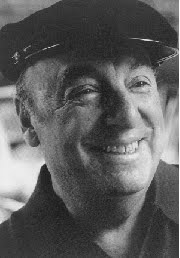
Pablo Neruda He Dies Slowly


HE DIES SLOWLY


He dies slowly who transforms his habits into slavery, repeating every day the same trips and who never changes the ruts, who never risks dressing in a new color and never speaks to someone unfamiliar.

He dies slowly who makes the television his guru.

He dies slowly who avoids passion, who prefers black over white and points over dashes to an eddy of emotions, it is precisely those that rescue the shine of the eyes, the smiles of yawns, hearts to stumbles and feelings.

He dies slowly who doesn’t turn the tables upside down when he is unhappy in his work, who never risks the certain for the uncertain in order to go after a dream, who never lets himself at least one time in his life flee the sensible advisors.

He dies slowly who never travels, who never reads, who never listens to music, who never finds thanks in the same.

He dies slowly who destroys his self-esteem, who does not help himself.

He dies slowly who spends his days grumbling about his bad luck or the incessant rain.

He dies slowly who abandons a project before he begins it, doesn’t question an assumption that he doesn’t know or doesn’t respond when he’s asked about something he knows.

We avoid death in gradual payments, remembering always that to live demands an effort much greater than simply breathing. Only impassioned patience will achieve a splendid happiness.


-- Pablo Neruda (translated by Jerry Blanton 10/27/06)


I enjoy translating from French and Spanish and Latin--the three languages with which I am most familiar.  Translating is a slow process for me. I follow these basic steps: (1) I read through in the original language until I'm sure I have the gist of the original. (2)  I note any words or idioms I am not sure of and look them up, sometimes in more than one dictionary. (3) If I feel frustrated, I will go to an on-line translating service and let them give me a standard translation.  (4)  Once I have a basic translation that is viable, I then work to create English sentences or lines that flow and carefully choose English diction that gives the tone and flavor of the original. (5)  I work to create a sense and feeling that is similar to the original language.  (6)  If the translation is a poem--and this is very hard to do--I try to mimic the rhythm and rhyme; but I have learned that it is better to give up the prosody if the attempt damages the meaning and mood.  (7)  I set it aside and return to it later just as I do anything I write.  I always find ways and means to improve the product on the second or tenth revisit.

Sometimes, just for amusement, I take my translation and have a translation service render it back into the original language.  The result is usually humorous.

When I am reading in a language other than English, I try to get a dual-language edition.  I read in the foreign language first and then check my understanding with the English translation.

Here are two dual-language editions of Neruda's poetry. The Essential Neruda: Selected Poems (Bilingual Edition) (English and Spanish Edition) ;  Twenty Love Poems and a Song of Despair: Dual-Language Edition (Penguin Classics) (Spanish and English Edition)

Sunday, June 6, 2010

holocaust Sophie's Choice

The book by William Styron Sophie's Choice (Modern Library) ; the movie by Alan J. Pakula  Sophie's Choice 


SOPHIE’S VOICE: MIAMI BEACH

To see Styron’s plaint transformed on screen,
We were driven by impulse to the old 79th Street monoplex
Where Streep could be the conundrum for us.
And she was that choice character, losing as usual her self in the role,
Engulfing us in cellulose virtuosity,
Virtually dreaming us into the silvered holocaust.
And then began the sniffling, the weeping, the moaning –
But not from the flickering phantasma, not from our own catharsis,
But from the creaking seats, from the dense dark surrounding us –
From ancient voices, anguish welled up into a flood –
Hundreds of Sophies and their children.
So when the lights rose, we froze in our chairs to watch
The hoar survivors limp out into the night,
Scratch their weathered tattoos – their emblems
Of suffering – and stumble into the cool night air
Of America, free but for memory.

1981


This is one of my favorite poems created from a serendipitous moment.  I thought that it had been published previously, but I can't remember where I sent it (perhaps South Florida Poetry Institute), and it was not included in any of my books of poetry.  A friend and I had read the book Sophie's Choice and wanted to see the movie (both of which I highly recommend).  However, the movie was playing only on Miami Beach, which had many older Jews living there at the time.  Having decided to go only that evening, we arrived late and entered a darkened theater just in time for the opening of the movie.

After the movie when the lights came up, we realized that we had watched this movie about the holocaust in a theater filled with surviving victims of the holocaust, many of whom had the still-visible numbers on their arms tattooed by the Nazi death machine.  This realization added a poignancy to our enjoyment, twisting our guts and shortening our breaths.


Friday, June 4, 2010

The Connected Homeless


THE CONNECTED HOMELESS


The frail, addled, tattered beggars along the streets of cities and under overpasses still exist although they’re not as visible as they once were. However, lately I’ve been noticing a different class of homeless people. I had always thought that one of the tragedies of being homeless was that during a time of wired technology, the homeless were disconnected from the rest of society: they were out of touch of television, radio, telephones, stereos and even the early Web. The rest of us were listening, watching, calling and emailing while the unfortunate who had no home and thus no plugs and modems to connect them to anything outside their makeshift shelters or vehicular homes were missing out on the greater world. Thanks to wireless technology, that aspect of being homeless is changing; the homeless now can retain filaments to the rest of us.

Because rents have risen so rapidly in my area, I’ve encountered a better-dressed contingent of homeless people. These are often single men who have jobs but can no longer afford rent. (My former neighbor who had been separated from his wife for five years recently moved back into her house because he could no longer afford rent, but single men don’t have that option.) I first noticed this type of person when I found one sleeping on the bench beside the tennis court where I practice early in the morning. He was stretched out asleep in the shade of the overhanging trees. He wore clean khaki pants, white tennis shoes with thick soles and a long-sleeved blue plaid shirt. On the table next to him rested the detritus of last night’s meal: a drained Gatorade bottle, a crumpled chip bag and clear cellophane that had contained a sandwich. He was approximately my height and weight. I set my tennis gear down heavily, so he would know I was present. When I did so, he grunted, and drew his left arm across his face to check the time on his wristwatch. Seeing that it was 8:30, he sat up, rubbed his head, stood and slowly walked away. As he did so, he pulled a cell phone out of his shirt pocket, punched in some numbers, and I heard him say, “I overslept. I’ll be a little late.” Another time I met a man going for a job interview. He had just emerged from a stand of trees and was wearing black street shoes, blue casual pants and a striped blue T-shirt, but hooked to his belt were a cell phone on one side and a pager on the other in case someone wanted to get in touch with him. He was combed and clean-shaven and wafted the essence of cologne I had sniffed at the toiletry counter in Macy’s. Over his right shoulder he carried items on hangers: a nicely pressed blue suit, a tie, and a clean white shirt. Over his left shoulder was strapped a small canvas bag. Since he knew he’d be walking and riding buses on a hot, humid day, he had planned a worksite change and freshening up.

Homeless families are also being consoled by the new wireless mobility. When I jog I move through a wooded area that encompasses about two square miles. I know that homeless people often camp in the woods because I’ve seen laundry hanging from lines strung between trees and seen the furtive movements of those hoping not to be noticed, but lately I’ve been hearing muted strains of music and conversations. Once as I ran, I noticed a young man walking ahead of me cut between two trees and head down a path toward some taller, fuller trees; in his hand he carried a bag of Arizona teas dripping with condensation. My return trip brought me nearby the taller trees, and there sat a high tent with plastic windows opened to catch the breeze, and inside were a young couple, reading, chatting, drinking cold tea and listening to an iPod. Imagine this: an entire family on the street: the father talking on his cell phone, the mother going over items on a palm pilot, and the children playing video games. I saw such a family. They had piled their personal belongings into two commandeered grocery carts and were slowly pushing up the street. The father was reassuring someone (a relative? a friend? an associate?) that they were ok and that they would find shelter soon.

Every generation seems to have its youthful wanderers who hit the road, traveling for adventure or enlightenment. The new generation has one advantage over the old: wireless technology. I see them at the park or during my runs or along the street. In some ways they remind me of my youth. They still wear tennis shoes, jeans, T-shirts and caps and have backpacks. Other aspects have changed: less hair but more tattoos and punctures. However, now they are additionally plugged into iPods or video games and communicate with their peers or families via cell phones or text messages. Maintaining a thread to the greater world makes for a more reassuring trek. Even though homeless, they can call the police if trouble threatens them, and they can make arrangements and call home easily.

Of course, wireless technology can’t solve the major problems of the homeless. They remain without the safe, secure comfort of their own bought or rented shelters. On the streets they encounter the usual dangerous characters: thieves, thugs, flimflammers, pimps, perverts and pushers. They’re at the mercy of the elements: cold, heat, wind, rain, snow. They have no barrier against other creatures: reptiles, insects, rodents and canines. But there’s some comfort to be able to listen to favorite music as one curls against a wall to rest or to check messages from buddies along the road or to know that if a need arises, one can call and find help. Those wireless amenities, which maintain links to the greater world, help hold the soul together and help the homeless feel a little more connected to the rest of us.

Thursday, June 3, 2010

Veronica Franco Casanova Heath Ledger


VERONICA FRANCO


Verily, verily these be the courtesan verities

Etched upon the flexible woman’s brow—

Reality as brutal as all other fealties.

Out of Venice, she brought as a woman now,

Not man, might bring these things to light

Incandescent as a burning bow,

Curtsy or genuflect in the breadth of night—

Anthems for women in which to believe

For dangerous darkness or dreary daylight.

Romances about beautiful life she could weave

And print them and read them and boldly shine,

Not abed necessarily, nor nursery bereave,

Chatting with the best minds line by line,

Owner of her world with a presence fine.


4/26-5/11/2009

 
This acrostic poem has not previously been published.  Veronica Franco is another amazing woman who lived in a time when women's minds were not valued.  She was a poet and literateur.  In the recent movie Casanova the female lead opposite Casanova was based on her.  Heath Ledger plays Casanova, so the movie has that added allure of the too-soon-gone actor of promise.
 
Since she was a poet, the acrostic devoted to her also rhymes (ababcbcdcdedee) and has fourteen lines as does a sonnet.  During her time, rhymed sonnets were common.

Wednesday, June 2, 2010


Windy, Rainy June Day


I was bundled – slicker, boots, cap, umbrella –
Against the obdurate rain and the mischievous yanks.
The gray host surrounded me in serried ranks
And volleyed salvos that gusted into my paraphernalia.

I wanted to challenge chance, and so emerged
Into the blustering glazed world that splashed
Beneath my boots and pimpled the puddles lashed
With silver dear drops rippling then submerged.

I took hits, yes, but strode bravely onward,
Soggy but steadfast through the ruffling bursts,
Setting the angle of the parapluie at first
Against the raging pellets that rattled forward.

Then came the little swim-suited ones, hands splayed,
Faces gleaming, the rain streaming down their cheeks,
As if pennants of the conquering sky, and they took peaks
Beneath my canopy of protection and hotly played

A laughter that sizzled under the awning
And warmed me. They giggled and screamed
“It’s summer! It’s summer!” and beamed,
And so brightened, my midday began its dawning.


In Florida, June is hot, but the heat is relieved by rain and wind which sweep across the land in late afternoon.  Older people may don raingear, but children often do the opposite: shedding clothing and running out so the rain soothes their skin.  On rainy days, I like to put on instrumental music that is soft and slow because it seems to mix well with the falling rain.  I wrote this poem about two years ago, but in June on a rainy day.

Tuesday, June 1, 2010

Georgia Okeeffe Taos Lee Ware


GEORGIA O’KEEFFE

Gorgeously artistic mind she had, so

Each time she spied a view—it was new,

Opposed to what she had been taught.

Rigorously focused more finely than a camera,

Gloriously deft eye she had—so

Indisputably hers—that her strokes seemed

As if she had merely swallowed a petal, and

Out of her it reappeared for us all to see.

Knowledge of light and line were there, too,

Exhibited to the world (by her spouse).

Enviously, we saw how seeing as she saw

First, made us second to the fine eye and

Fine hand that ever steadily drew us into her

Ever finer, ever greater, artistic universe.


This acrostic poem has never been published before now.  I wrote it in 2008.  Okeeffe has long been one of my favorite artists.  I have visited Taos, New Mexico, and seen her home and many of the buildings she painted--and vistas, and flowers, and plants.  I admire her person as much as I admire her paintings, for she was as true to her person as her art.  One of my favorite birthday gifts was a book of her paintings, given to me by Lee Ware, who understood my soul as much as anyone ever has. The book was titled Georgia O'Keeffe, A Studio Book and was published by Viking Press in 1976.  I haven't been able to find it on the Web, so it is probably out of print.

Follow this link to buy prints of her paintings.  Georgia Okeeffe